

Meet the team
QIST CDT Leadership
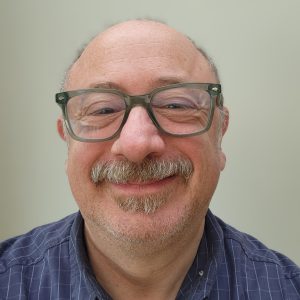
Dr Jon Goldwin, CDT Director
Jon Goldwin is the Director of the Quantum Information Science and Technologies CDT and Associate Professor in Physics at the University of Bristol. Dr Goldwin is an experimental atomic and optical physicist with a focus on quantum technologies and light-matter interactions. Goldwin received his PhD from JILA at the University of Colorado, Boulder, where he built one of the first-generation quantum Bose-Fermi mixture experiments. He then moved to Imperial College, London, where he worked with microfabricated optical cavities, demonstrating fast, high-fidelity detection of single atoms on a chip. From 2009-2022 Dr Goldwin led a research group at the University of Birmingham, where he built the UK’s coldest laser — one thousandth of a degree above absolute zero! — and collaborated on several projects exploring quantum sensing and metrology with cold atoms. Dr Goldwin then entered industry to build quantum computers, first with neutral atoms and then with trapped ions. In 2026 Goldwin joined the Quantum Engineering and Technologies (QET) Labs in Bristol, where he is building a research programme to apply the quantum computing toolbox to atomic sensors and clocks, and to develop novel microfabricated photonics components to enhance light-matter interactions.
Prof Winfried Hensinger, Deputy Director and Sussex PI
Winfried Hensinger is a Professor of Quantum Technologies at the University of Sussex where he heads the Sussex Ion Quantum Technology Group. He is the director of the Sussex Centre for Quantum Technologies. He is a co-founder of Universal Quantum, a full stack quantum computing company, where he serves as Chief Scientist and Chairman. Hensinger’s group is working on developing practical trapped-ion quantum computers as well developing quantum simulation engines and quantum sensors. In 2017, Hensinger led a team from Google, Aarhus University, Siegen and Riken in proposing the first industrial blueprint to build a practical quantum computer with millions of qubits capable of solving important industry problems.
The CDT Team in Bristol

Dr Carrie Weidner
Dr Carrie Weidner is one of our Bristol lecturers. Weidner did her PhD in JILA at the University of Colorado Boulder, USA under Prof. Dana Z. Anderson, and she worked on building inertial sensors using atoms trapped in optical lattice potentials. Weidner then moved to Aarhus University, DK to work on quantum simulation using quantum gas microscopy, as well as dabbling in robust quantum control and quantum physics education research. Since moving to Bristol in 2022, Weidner has been setting up her own research group focused broadly on (mostly) experimental quantum sensing, simulation, and information with atoms in optical lattice potentials. Dr Weidner also continues to work in robust quantum control, quantum physics education, and is increasingly interested in the interplay between atomic physics and integrated photonics. In addition to lecturing on the CDT, Weidner is a co-work package lead for the EPSRC Quantum Enabled Positioning, Navigation, and Timing Hub, focusing on practical implementation of quantum inertial sensors.

Dr Rachel Clark
Prof. Nightingale is a Professor of Strategy in SPRU (Science Policy Research Unit) and he holds the post of Associate Dean of Research in the Business School. Paul originally trained as a chemist working in industry, after his PhD, he did a lot of work on bioinformatics systems and risk management technology investment banks. Paul has also worked extensively on policy work on innovation policy in the UK and led NESTA’S Innovation Gap research project. His main areas of work now relate to finance and financial innovation and it’s impact on the economy. This involves work on the funding of small firms, especially innovative small firms. He also works on project delivery, trying to understand what drives success in major transformational projects and major R&D projects.

Ms Eszter Szatmari
Eszter is the CDT Centre Manager and your first point of contact for any queries from current or prospective students, as well as academic staff. She oversees all aspects of student administration—from your initial application right through to graduation—ensuring a smooth and supportive experience throughout your journey.
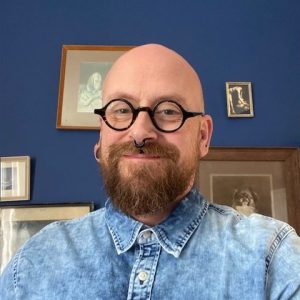
Mr Pete Bowles Barrett
Pete is the CDT Centre Administrator, helping to manage and support all aspects of the programme.
The CDT Team in Sussex
Prof Jacob Dunningham
Prof Dunningham is Professor of Physics, Deputy Director of the Sussex Centre for Quantum Technologies. Jacob’s research spans the fields of quantum information, quantum optics, Bose-Einstein condensation and metrology. He is interested in fundamental issues of quantum physics and how they can be exploited in practical schemes and new technologies. He has supervised 14 PhD students and published three books and more than 80 papers in peer-reviewed journals including Science, Nature journals and Physical Review Letters. He is a Fellow of the Institute of Physics.
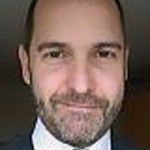
Prof Paul Nightingale
Rachel is one of our Bristol lecturers. After completing a Physics MPhys at the University of Manchester, Rachel joined Cardiff University to complete an MSc and PhD on the Compound Semiconductor Manufacturing CDT as part of the inaugural cohort. Her PhD research focussed on III-V semiconductor microfabrication of quantum dot devices for single-photon metrology, and she completed a secondment in the Quantum Technologies team at the National Physical Laboratory to develop single-photon detector calibration techniques. Since then, she has worked in Bristol on silicon-nitride integrated photonics for continuous-variable quantum optics. Her current research interests and future ambitions include designing and characterising integrated quantum light detectors for applications across the near-infrared.
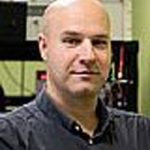
Dr Fedja Orucevic
Dr Orucevic’s research interests encompass both fundamental and applied quantum physics. Fedja is involved in various research projects in ultracold atoms, including the fundamental studies of low-dimensional quantum gases. On the more applied side, he works on the design and optimisation of low-powered cold atoms sources and the development of quantum sensors. As an investigator in the UK National Quantum Hub for Sensing and Timing, the focus of his research is on development of quantum magnetometers for use in navigation, healthcare and electric vehicle battery characterisation and diagnostics – much of this work is done in collaboration with industrial partners.

Mrs Sinead Rance
Sinead is the CDT centre Manager here at Sussex, she has been supporting research at the University for 12 years and brings extensive experience supporting Post Graduate Researchers as she is also currently the Assistant Research Manager for our 4 Sciences Schools at the University. Sinead has also previously managed a EU-Horizon2020 ETN for 5 years. She will be managing all aspects of the course/programme and always available for help needed.